2/9
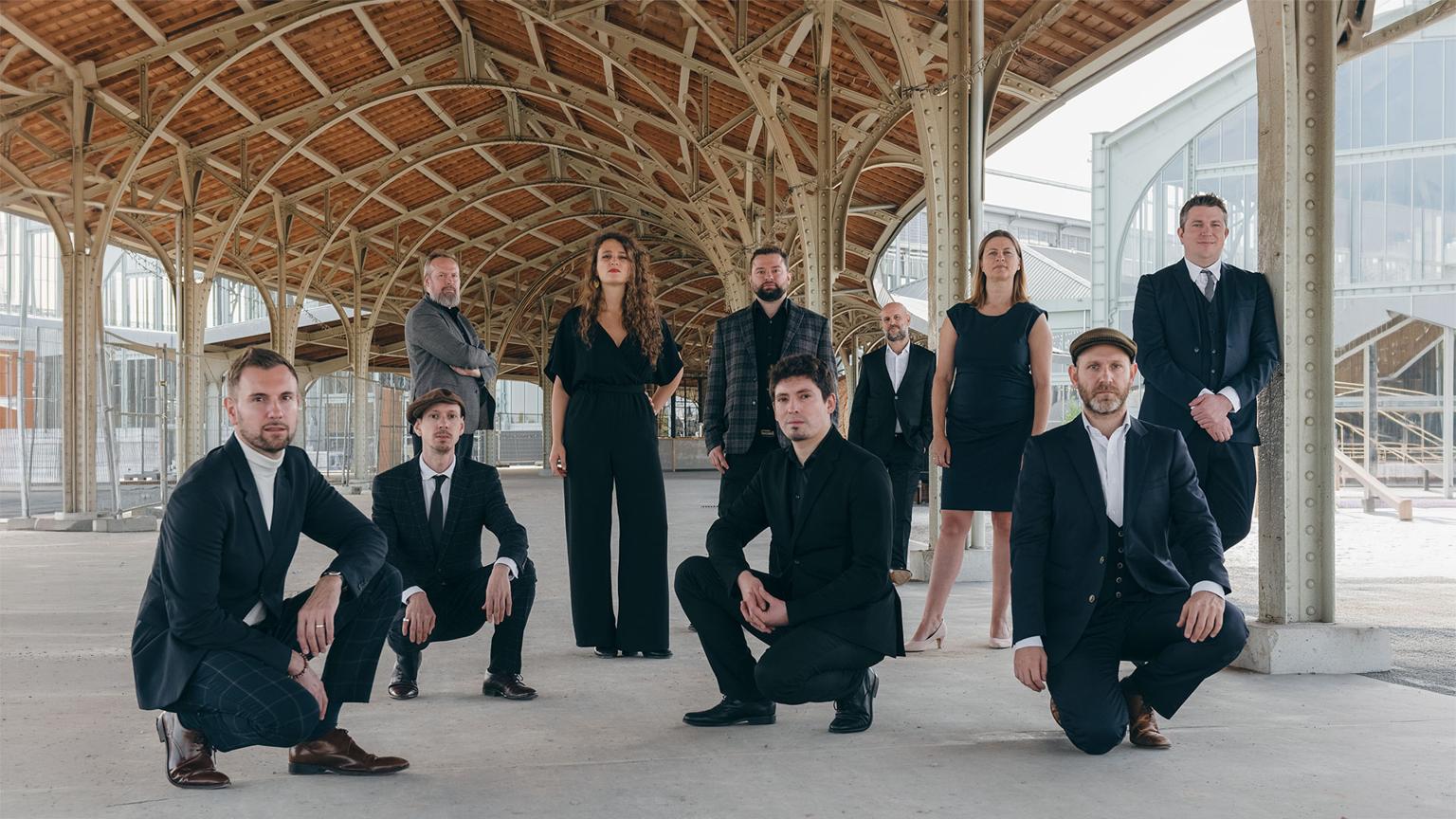
Sonico: Piazzolla – RoviraThe Edge of Tango (BE)
During the 1950s, both Piazzolla and Rovira began to challenge the established forms of tango. Drawing on influences from jazz, classical music and modernism, they developed a more complex and expressive musical language. The result is music marked by rhythmic precision, harmonic daring and an intense chamber-like interplay, where improvisation and contrast play a central role.
Piazzolla–Rovira: The Edge of Tango is based on the rediscovery of scores from Octeto Buenos Aires — which were burned by Piazzolla himself — as well as material from Octeto La Plata, whose scores were partially lost in a flood. With these ensembles, the two protagonists explored the boundaries of tango for the first time. The result is a vivid and powerful portrait of one of tango’s most radical periods of renewal, where tradition, experimentation and virtuosity converge.
Sonico was founded in Brussels in 2015 and is the only ensemble in the world entirely dedicated to the music of Eduardo Rovira. In recent years, the group has gained recognition not only for its distinctive approach to performing tango, but also for its extensive archival work, reconstructing a large number of works through the transcription of recordings from the 1950s, ’60s and ’70s.
“Sonico is dedicated to bringing Rovira’s work to a wider audience. For those who take pleasure in Piazzolla’s music, Rovira’s should prove similarly gratifying if not a revelation (…) Perhaps it’s because Piazzolla broadened the parameters of what a tango can be that we’re now able to appreciate Rovira’s genius as well.” – Gramophone Magazine, July 2021
This systematic rediscovery of contemporary classics, combined with a high level of instrumental and stylistic precision, represents something previously unmatched in the world of tango.
On stage:
Lysandre Donoso – bandoneon
Maxime Point – bandoneon
Alejandro Schwarz – guitar
Stephen Meyer – violin
Daniel Hurtado Jiménez – violin
Bartosz Korus – viola
Guillaume Lagravière – cello
Ariel Eberstein – double bass
Ivo De Greef – piano
The group’s latest album was produced with the support of Flanders State of the Art.
During the 1950s, both Piazzolla and Rovira began to challenge the established forms of tango. Drawing on influences from jazz, classical music and modernism, they developed a more complex and expressive musical language. The result is music marked by rhythmic precision, harmonic daring and an intense chamber-like interplay, where improvisation and contrast play a central role.
Piazzolla–Rovira: The Edge of Tango is based on the rediscovery of scores from Octeto Buenos Aires — which were burned by Piazzolla himself — as well as material from Octeto La Plata, whose scores were partially lost in a flood. With these ensembles, the two protagonists explored the boundaries of tango for the first time. The result is a vivid and powerful portrait of one of tango’s most radical periods of renewal, where tradition, experimentation and virtuosity converge.
Sonico was founded in Brussels in 2015 and is the only ensemble in the world entirely dedicated to the music of Eduardo Rovira. In recent years, the group has gained recognition not only for its distinctive approach to performing tango, but also for its extensive archival work, reconstructing a large number of works through the transcription of recordings from the 1950s, ’60s and ’70s.
“Sonico is dedicated to bringing Rovira’s work to a wider audience. For those who take pleasure in Piazzolla’s music, Rovira’s should prove similarly gratifying if not a revelation (…) Perhaps it’s because Piazzolla broadened the parameters of what a tango can be that we’re now able to appreciate Rovira’s genius as well.” – Gramophone Magazine, July 2021
This systematic rediscovery of contemporary classics, combined with a high level of instrumental and stylistic precision, represents something previously unmatched in the world of tango.
On stage:
Lysandre Donoso – bandoneon
Maxime Point – bandoneon
Alejandro Schwarz – guitar
Stephen Meyer – violin
Daniel Hurtado Jiménez – violin
Bartosz Korus – viola
Guillaume Lagravière – cello
Ariel Eberstein – double bass
Ivo De Greef – piano
The group’s latest album was produced with the support of Flanders State of the Art.